In short: The virus is the greatest challenge to the Party in recent memory, but it is more likely to sharpen its authoritarian model than to weaken its control.
I. Background
In the two weeks since January 26, the death toll inflicted by the novel coronavirus pneumonia has risen from 56 to 813, as the number of infected individuals worldwide has skyrocketed from 2,054 to 37,553. These are based on statistics confirmed by the Chinese government, and it is possible (and as some allege¹, quite likely) that the number for both the deceased and infected are significantly higher.
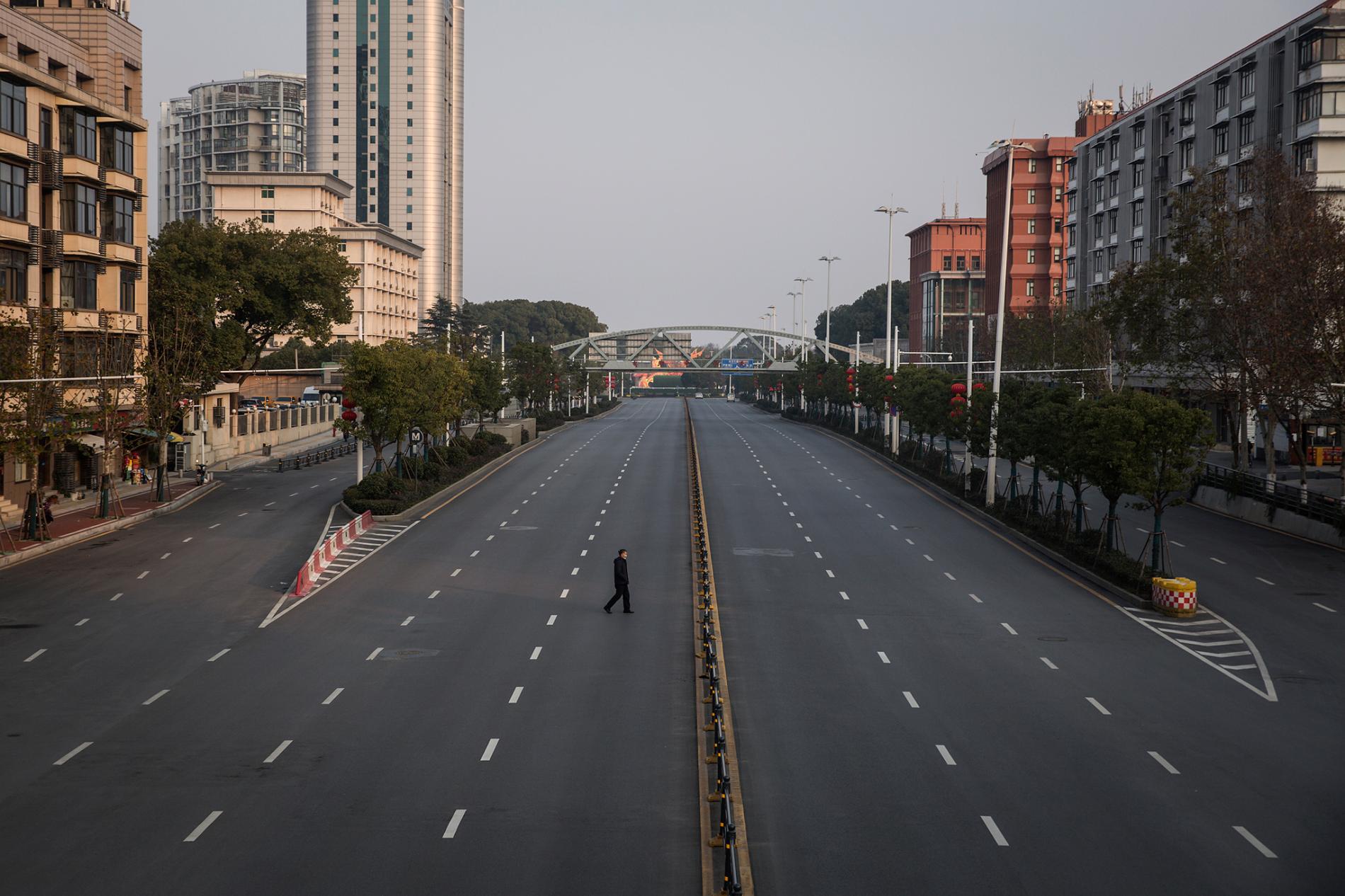
We do not need to ascertain precise values to understand the gravity of the situation. Numbers can be easily downplayed but actions, for the most part, cannot. The central government, which has long-staked its reputation and legitimacy in fostering economic growth, has consciously placed the economy on the back-burner as efforts to contain and mitigate the outbreak have ramped up. Workplaces have extended their holidays, schools are prepared to be closed indefinitely, and entire urban areas have enacted measures to limit the travel and gathering of people. Even for the businesses that have resumed operations, the vast majority of workers are working from the confines of their homes. If one were to be hypothetically unaware of the virus, it would appear as if China has partially mobilized for war.
But when one fights an enemy that has no face, the masses still require an outlet to express their discontent. As the outbreak garnered increasing attention, one question resonated across the country: How did this fester and spiral out of control?
In search of an answer, Wuhan’s municipal government and Hubei’s provincial officials took the blame. When the city was locked down, the narrative of the central government coming in to set things right was established. This is not necessarily a falsification of what happened, but even in this official account, it sharply reflects the limitations of the Party’s control and competence. One can point to the fact that China has always had bureaucratic inefficiencies, dating back to dynastic periods where the sheer volume of subjects made it an insurmountable task to efficiently govern the entire land. Yet just as these are old issues, so are the excuses. Much of the populace was unsurprised by the official narrative of local incompetence. But it did not also mean that they patiently took it in stride.
When one of the virus’s first whistleblowers passed away from the sickness, a tremendous flood of grief and anger swept the nation. The immense sadness came because Dr. Li Wenliang, based in the outbreak’s epicenter of Wuhan, was seen as a hero who prioritized the public’s safety above himself. As for the the intense fury, it was sparked by the fact that despite his efforts to raise awareness, he was silenced by local authorities for ‘rumor-mongering’ before the outbreak was officially reported on. The outrage against the government as a whole, which began on social media, eventually spread to previously-unimaginable places such as state-owned newspapers and propaganda outlets (which later deleted their critical messages)². Despite the central government acknowledging his death and setting its anti-corruption investigators on the case, the public’s reaction indicates that many are unconvinced of the government’s efforts to posthumously play him up as a hero when it was government suppression that exacerbated the situation.

II. Outcomes
As China’s issues continue to mount, there has been an uptick in the perspectives that the outbreak will manifest into a threat to the Party’s rule. While the outbreak and its associated discontent have absolutely become the greatest challenge to Xi Jinping’s administration since he took power, hoping for an incoming push for grassroots liberalization may teeter on the edge of wishful thinking. Instead, the Party will likely only be further galvanized to follow its tried and trusted methods of control: accentuating the capabilities of its central authority and enhancing the implementation of high-tech monitoring and surveillance tools.
A few days before Dr. Li’s death, Xi Jinping announced at a Standing Committee meeting that “the outbreak is a major test of China’s system and capacity for governance, and that we must sum up the experience and draw a lesson from it.”³ While this primarily pertained to practical improvements of the country’s emergency management system, sanitary conditions, and cracking down on illegal wildlife markets, it hinted at the necessity to change systemic and deep-rooted inefficiencies. It also hinted at a tinge of insecurity.
As evidenced by the total lockdown of Wuhan and Hubei province – albeit only after it had undeniably spread to other countries – the central government showed it would prefer being excessive with its containment measures rather than tolerate greater risks. In an ironic respect, while the initial suppression of information (allowing the outbreak to continue) and the rapid quarantining of an entire metropolitan area (keeping the worst of the outbreak localized) might be polar opposites in terms of practical effects, both actions align with the Party’s behavioral tendencies to stifle and subdue whatever it sees as a potential threat. An institutionally-ingrained behavior such as this would only be applied in the same manner to the new wave of public discontent.
The Party would thus fall back on familiar methods to keep the public in check – incorporating a fusion of suppression, token efforts to recognize ‘grassroots heroes’, and an ample dosage of appealing to patriotism. In the meantime, the central government would seek more ways to effectively exercise control over local issues.
There is another reason as to why the Party would be willing to pursue these methods. Just as China’s tremendous economic growth over the past twenty years has added on to the Party’s legitimacy, it has also given it vast amounts of capital to the state’s coffers. Every apparatus of the Party, from the military and paramilitary to its state-owned enterprises and central organs, continues to function at a heightened capacity. If their funding and subsidies continue to flow, they will remain as astute tools of the government to maintain order and control.
It should also be noted that if this were to happen seven years ago when Xi took power, he might have certainly lost a great deal of political capital – a circumstance that some allege will occur now. However, Xi and his faction has meticulously made sure that any loss of political capital would be significantly blunted against his rule. As soon as he became the paramount leader in 2013, massive anti-corruption campaigns rooted out any real internal challenge to his faction of the Party, and hefty efforts to change the constitution and solidify his control over the military have made him far less vulnerable to adversity than most regimes. He is not impervious to the fear of being weakened, but as it currently stands, he is not in a position of being truly threatened.
In addition to Xi’s adjustments of the political environment, the state has strenuously expanded its technological capabilities to monitor misconduct among its subordinate branches and citizens. When looking at the causes of the outbreak and the resulting public outcry, the main lesson that the central government may take away is that its grip on the situation was insufficiently strong. The failures of a local government will only further push the advancement of systems that would ease the obstacles for central control.
Several applications were already in the pipeline, such as big data-fueled governance, AI-driven identity recognition, behavioral pattern prediction, geolocking, and a social credit system at the individual level. These are largely dependent on the maturation of artificial intelligence research (although some of these have already seen extensive usage in parts of the country), and in calmer times, the implementation of these systems may have been rolled out in a more passive manner. But as larger crises have emerged and the country enters a more mobilized state, the implementation process may be accelerated.
III. The Caveat
There is one possible scenario that might challenge the rigidness of the Party’s response, but it would require a number of pessimistic factors (for the Party) to align. If a tremendous economic downturn takes hold and extends well beyond the first and second quarters, hitting not just China’s global clout but also inflicting greater damage to domestic well-being, the leadership would have to simultaneously wrestle with pre-existing public unrest, keep its tools of order up and running, and focus on maintaining legitimacy within the Party. Anything short of a total combination of such would be unlikely to threaten the ruling regime.
Even in this ‘worst-case scenario’, the Party is nevertheless unlikely to significantly liberalize. The institutionalized tools and tendencies that the Party has always gravitated towards extend beyond the influence of just one person or one internal faction. The stark reality is that in any scenario, we would most likely see a general continuation of current tendencies, even if the faces at the top were to change. Quite simply, the crisis that the Party currently faces (as it stands) is not severe enough to constitute a deeper reformation of institutional values and attitudes.
In Summation
It is of no question that the viral outbreak and the public’s outpouring of discontent is the current administration’s greatest challenge yet. But as much as the General Secretary might speak about systemic changes, it is much more likely for the Party’s leadership to desire a more efficient top-down model over one that genuinely fosters an open culture at the grassroots level. The Party knows it is at a crossroads, but between the multiple paths it can take, it would much rather go for the path that is least unknown. For a government that has only sought to entrench its current model in recent years, the most unfamiliar road forward would be a loosening of its grip.
–
Sources and Further Reading:
Bloomberg: Xi Has Lots at Stake as China Officials Point Fingers Over Virus

¹Deutsche Welle: Wuhan medic: 'Many more infections than official numbers show'

The Economist (and image source): Mourning for a medic - Li Wenliang’s death is a new crisis for China’s rulers

Foreign Policy: Chinese Officials Can’t Help Lying About the Wuhan Virus

The Jamestown Foundation: The CCP’s New Leading Small Group for Countering the Coronavirus Epidemic

National Geographic (and image source): Life Inside Wuhan

²The New York Times: Widespread Outcry in China Over Death of Coronavirus Doctor

The New York Times: How China Uses High-Tech Surveillance

³Xinhua: Xi chairs leadership meeting on epidemic control / 中共中央政治局常务委员会召开会议 研究加强新型冠状病毒感染的肺炎疫情防控工作 中共中央总书记习近平主持会议

Updated Charts: JHU - CSSE
 The Constant